Performance
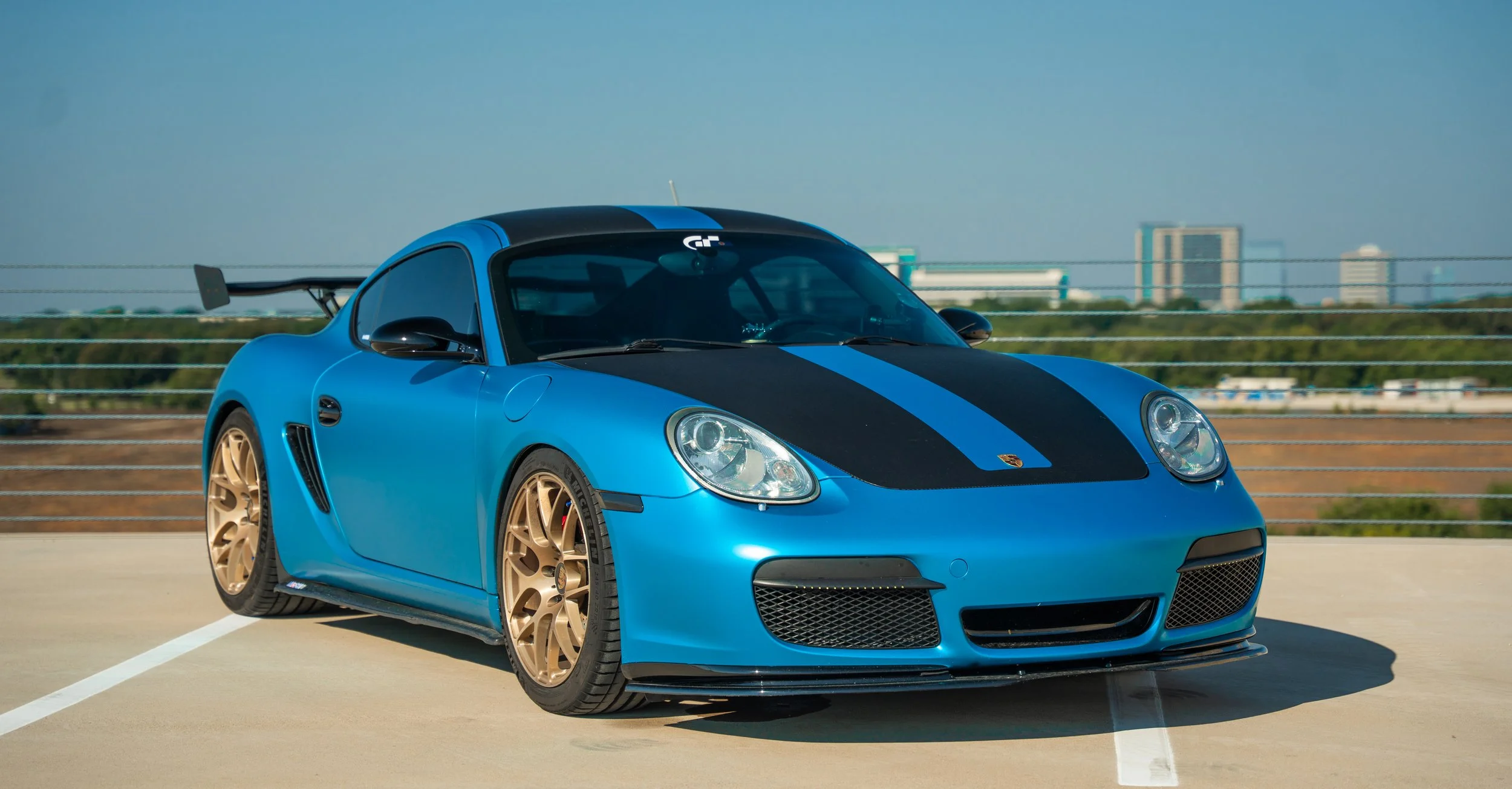
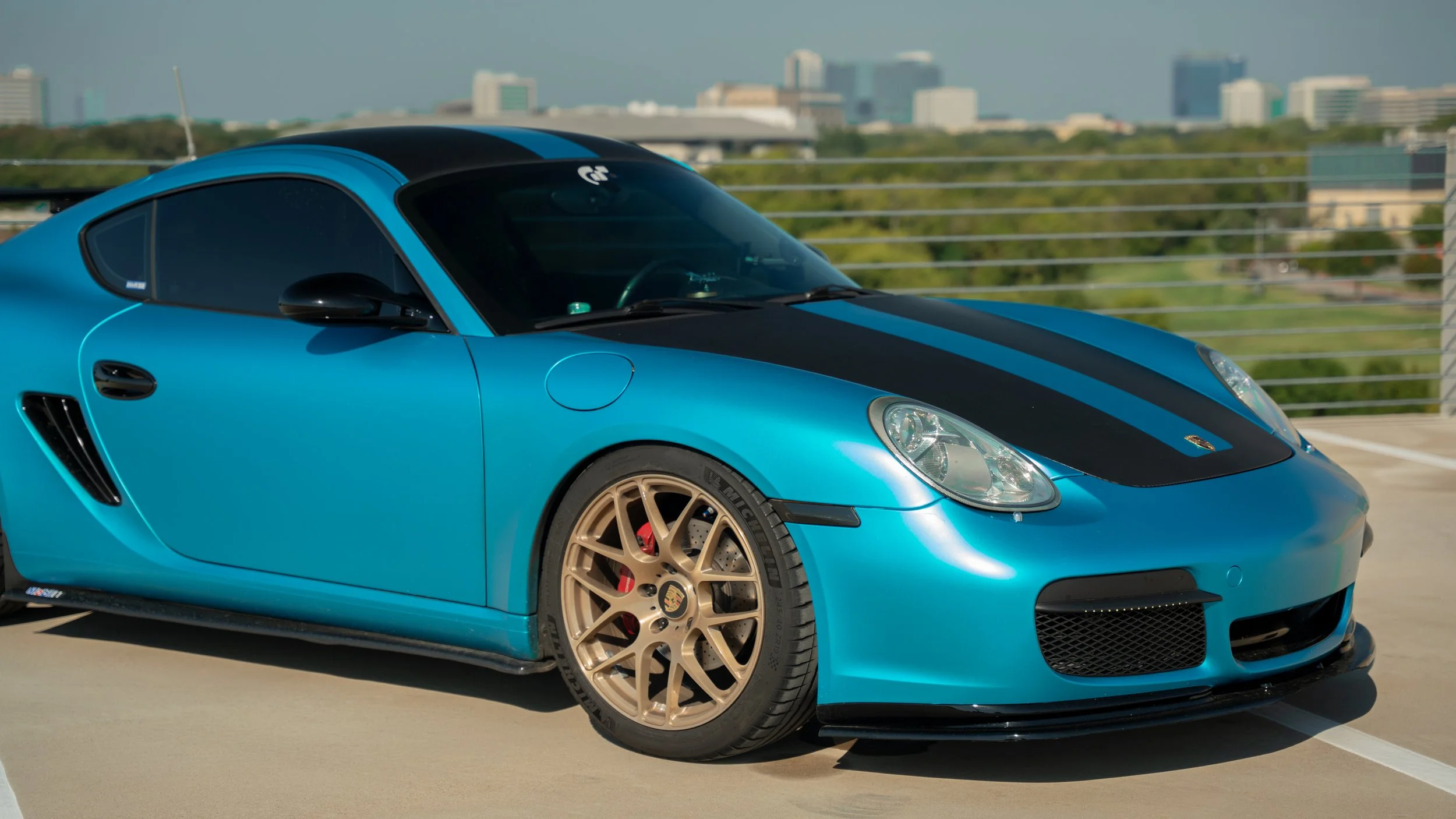
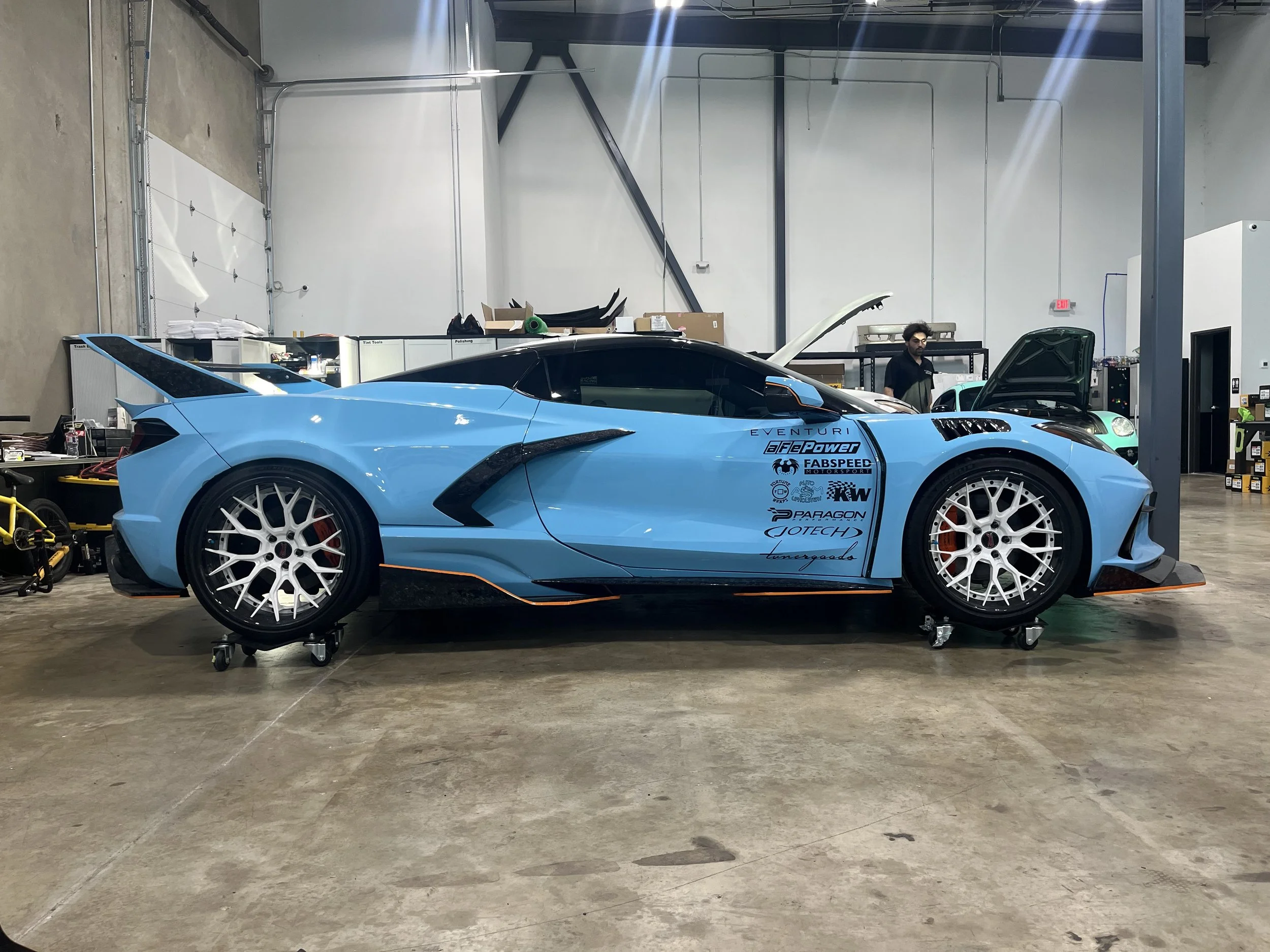
Performance vehicles are often described as the elite athletes of the automotive world, where every component is tuned to balance raw power with surgical precision. While straight-line speed is a common benchmark, a true performance build is defined by its ability to manage the physics of cornering and high-speed stability.
The Process
-
-
Upon invoice approval, a deposit is required to secure your position in our production queue and initiate the acquisition of parts and materials.
-
We prioritize transparency; once your materials arrive, we will host a private viewing to ensure every detail is perfect before we begin the transformation.
-
To ensure the highest level of craftsmanship, our full-scale transformations typically require a one-to-two-week production window. We maintain a dedicated digital log for your project, sharing curated photos and videos so you can witness the transformation of your vehicle.
-
The final stage of our process includes a signature detail and ceramic protection, ensuring your bespoke commission arrives in flawless condition.
Frequently Asked Questions
-
Sticking to a "refined OEM" approach is often the most reliable way to increase performance without compromising the longevity of the engine. By optimizing the air-to-fuel cycle within factory parameters, you improve efficiency and throttle response while maintaining the car's original character.
-
1. The Entry-Level Tier ($500 – $1,200)
This is the "essential" bracket that fixes factory bottlenecks. It’s perfect for someone who wants to feel a difference without a massive financial commitment.
Intake & Filter: High-flow drop-ins or shielded cold air intakes typically run $150–$400.
Plug-and-Play Tuner: Handheld or piggyback modules (like a JB4 or Accessport) range from $350–$700.
Lowering Springs: For those wanting a sharper look and lower center of gravity without the cost of full coilovers, expect to pay $250–$450.
2. The Mid-Range "Bolt-On" Tier ($1,500 – $4,000)
At this level, you start addressing the car's handling and exhaust flow more seriously.
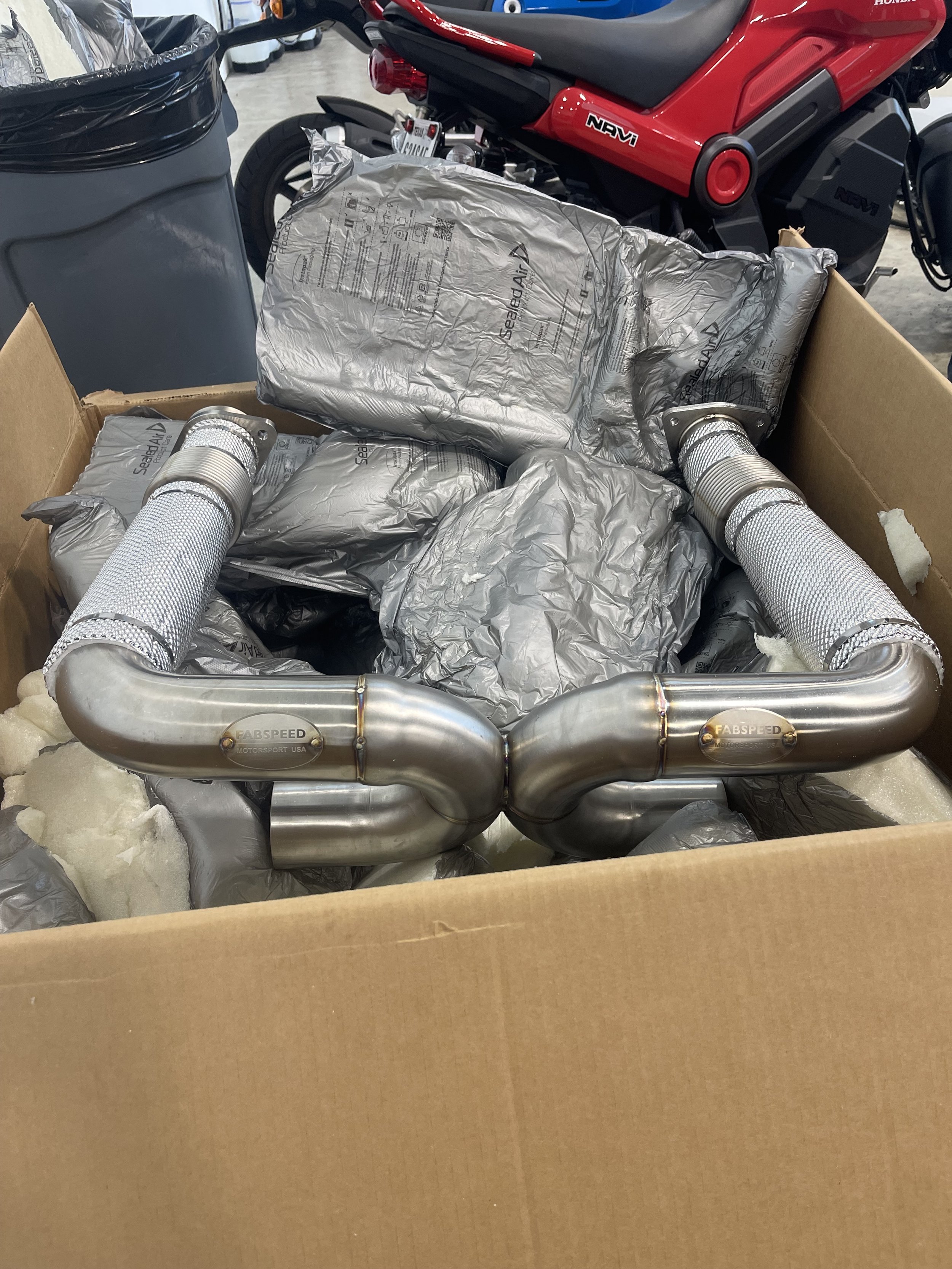
Cat-Back Exhaust: A quality T304 stainless steel system usually sits between $800 and $1,800 depending on the platform.
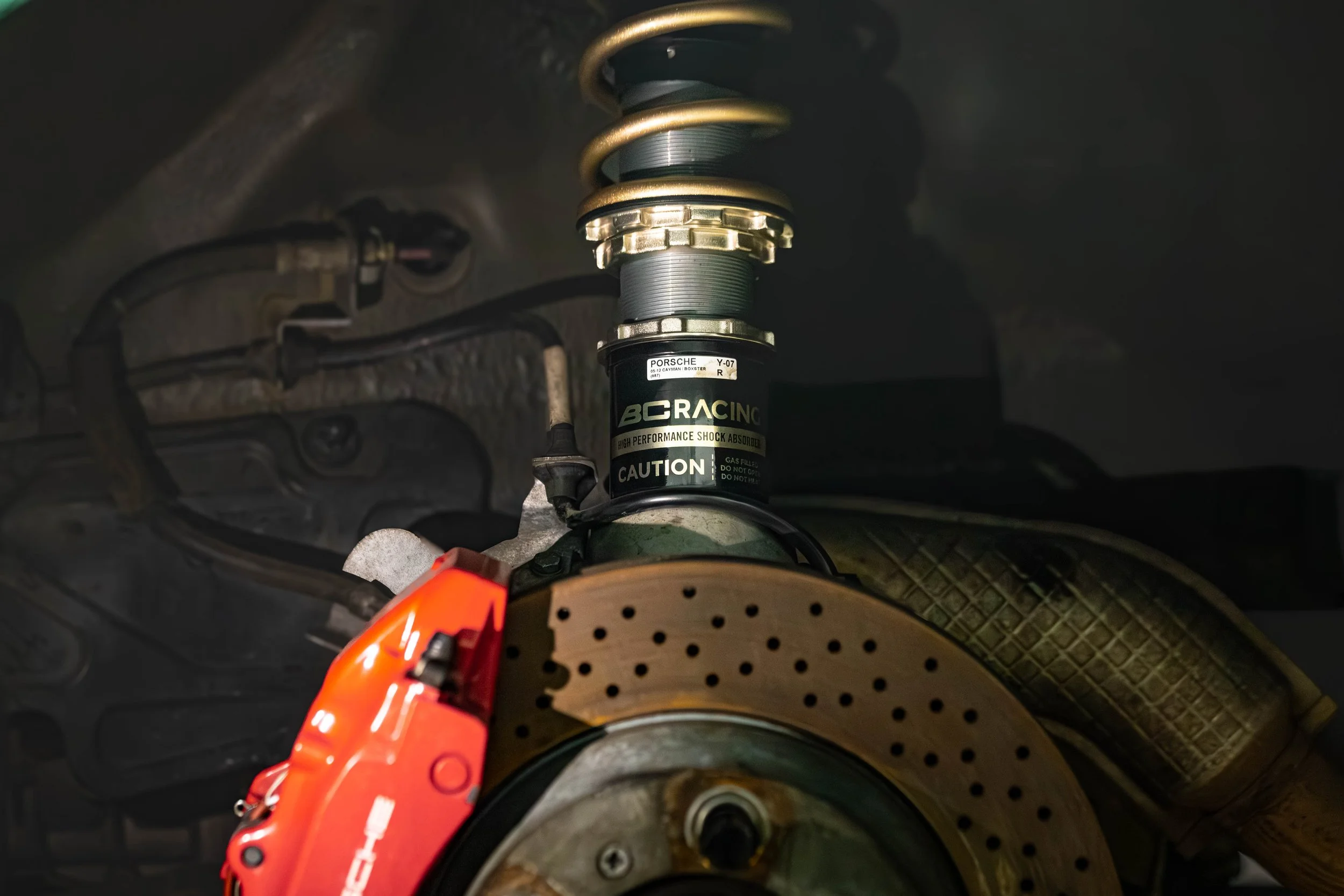
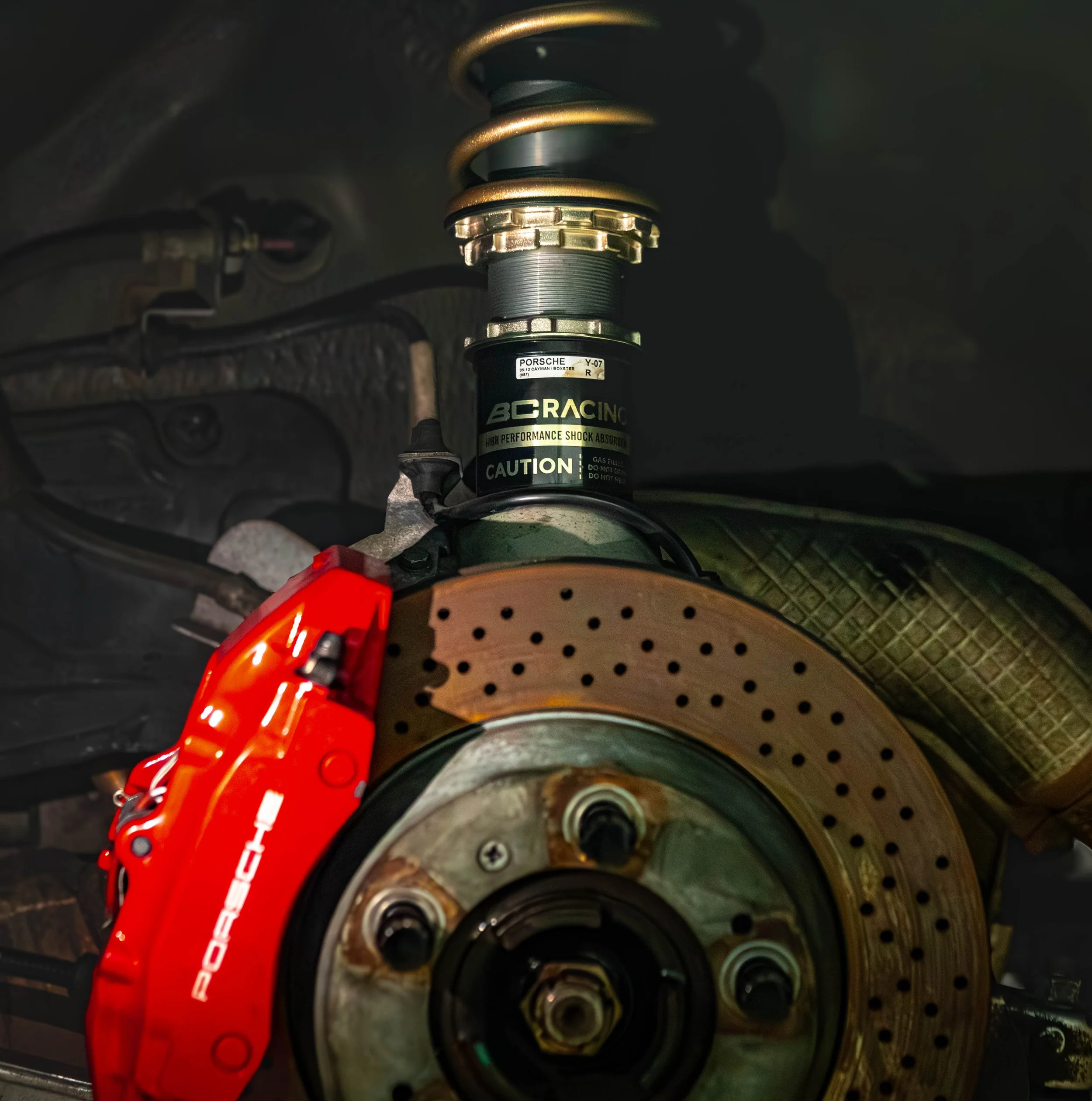
Entry-Level Coilovers: For height and damping adjustability, reliable "street" coilovers (like Tein or BC) start around $900–$1,200.
Performance Tires: Swapping to a dedicated summer or performance all-season tire is the single best handling upgrade you can make, typically costing $600–$1,000 for a set.
3. The Balanced Performance Tier ($5,000+)
This is where the "full makeover" philosophy lives. It moves beyond just adding power to ensuring the car can actually use it.
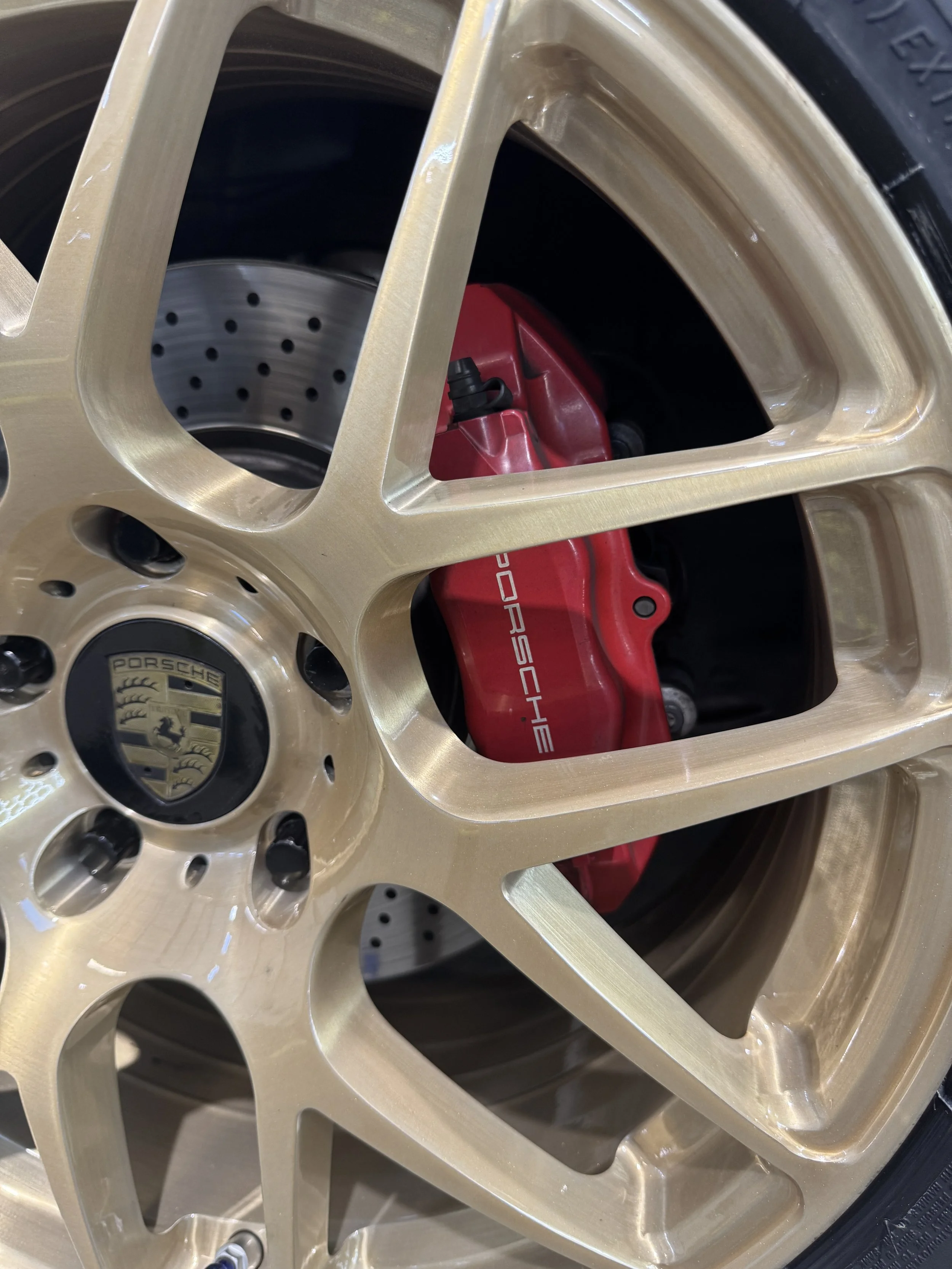
Supporting Mods: This includes upgraded brake pads/fluid, sway bars, and lightweight wheels to reduce unsprung weight.
Professional Alignment: Once you've changed the suspension, a precision alignment is mandatory to ensure the car tracks straight and handles g-forces predictably.
-
The Magnuson-Moss Warranty Act
In the United States, a dealership cannot legally void your entire warranty just because you installed an aftermarket part. However, they can deny a specific warranty claim if they can prove that the modification directly caused the failure.
Example: If you install a cat-back exhaust and your power window motor fails, the dealership must still honor the warranty for the window.
The Conflict: If you install a plug-and-play tune and the turbocharger fails, the dealer can argue that the increased boost pressure caused the failure, leading to a denied claim.
Pro Tip: Always keep your factory parts. If a major mechanical issue arises, having the original intake or exhaust can be helpful for diagnostic purposes—or for returning the car to stock if you decide to trade it in later.
-
1. The "Weekend Warrior" Upgrades (1–3 Days)
These are high-impact, bolt-on modifications that don't require opening the engine or heavy fabrication.
Day 1: The Foundation (Suspension & Chassis)
Installing coilovers or lowering springs, along with front and rear sway bars.
This stage focuses on the "under car" setup to ensure the vehicle handles g-forces predictably.
Day 2: Breathing & Tuning (Intake, Exhaust, & Software)
Swapping out the factory airbox and cat-back exhaust.
Applying a plug-and-play tune and performing a precision alignment. An alignment is mandatory after any suspension work to ensure the car doesn't pull or scrub tires.
3. The "Deep Build" Phase (1 Month+)
When a project moves into rebuild territory, the clock resets. These timelines are often dictated by parts availability and precision machining.
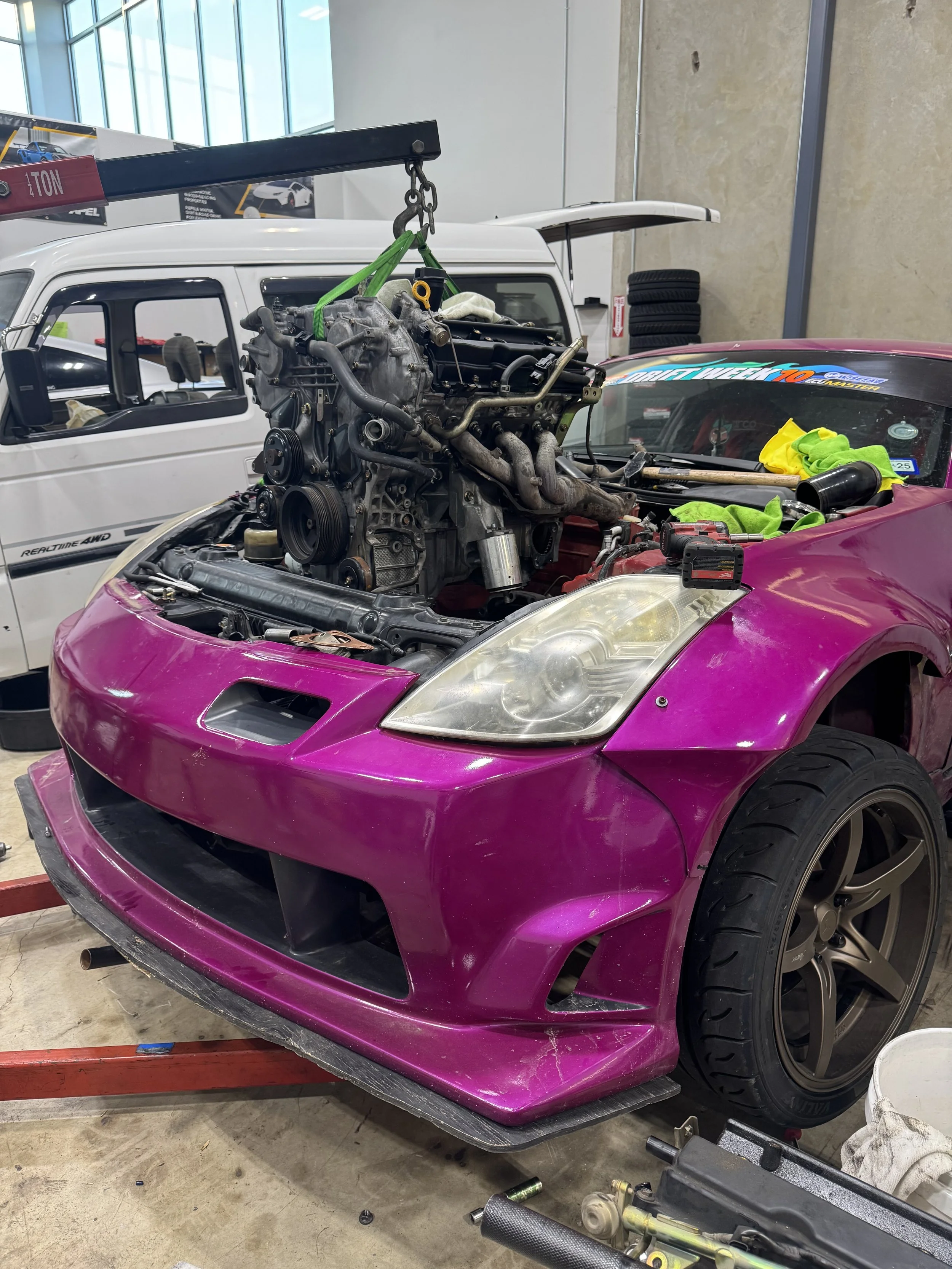
Engine Rebuilds: If you are refreshing a high-maintenance platform—like a rotary engine or a high-strung turbocharged unit—measuring tolerances and sourcing OEM-spec seals or forged internals can easily take 2 to 4 weeks.
Widebody Conversions: Installing a kit (like a Pandem or Sigala setup) isn't just about bolting panels on. It involves:
Cutting and sealing factory fenders.
Test-fitting and "clocking" the new panels.
Paint matching or wrapping the new aero to match the chassis.
Custom Fabrication: If the vision requires a one-of-a-kind roll cage or bespoke interior work, the labor hours climb significantly.
Pro Tip: For daily drivers, it's often better to do the "2-day" mods in stages rather than tearing the whole car apart at once. This keeps the car on the road and allows you to feel the incremental improvements in handling and power.
-
1. The 5,000-Mile Standard (Spirited Daily Drivers)
For a car with "little upgrades" like an intake, exhaust, and a mild PnP tune, a 5,000-mile interval using a high-quality full synthetic is the "sweet spot."
Shear Stability: Full synthetics resist breaking down under heat much better than blends.
Consistency: Staying with factory-specified weights (e.g., 0W-20 or 5W-30) ensures that the variable valve timing and oil pump pressures remain within the intended operating window.
2. The 3,000-Mile "High-Performance" Interval
If your vehicle is seeing higher boost levels or frequent high-RPM pulls, moving the interval up to 3,000 miles is cheap insurance.
Fuel Dilution: High-performance tunes often run slightly "richer" to keep combustion temperatures down. This can lead to small amounts of fuel seeping past the rings and thinning the oil, which a shorter interval effectively manages.
Filtration: Always pair a high-performance oil change with a high-efficiency filter to catch the microscopic debris that builds up during aggressive driving.
3. The "Track Day" Protocol (Before & After Events)
When you are holding a car at its limit for 20-minute sessions, the oil experiences extreme thermal cycling.
Pre-Event Check: Fresh oil ensures you have maximum "TBN" (Total Base Number) to neutralize acids and the best possible viscosity to protect bearings under high g-forces.
Post-Event Analysis: Changing the oil after the track allows you to inspect it for metallic glitter or a "burnt" smell, which are early warning signs of engine wear. It also removes the oil that has likely been "cooked" by the high heat of the turbo or high-revving NA internals.
What To Consider
-
![Close-up of a black car tire with a white, multi-spoke alloy wheel.]()
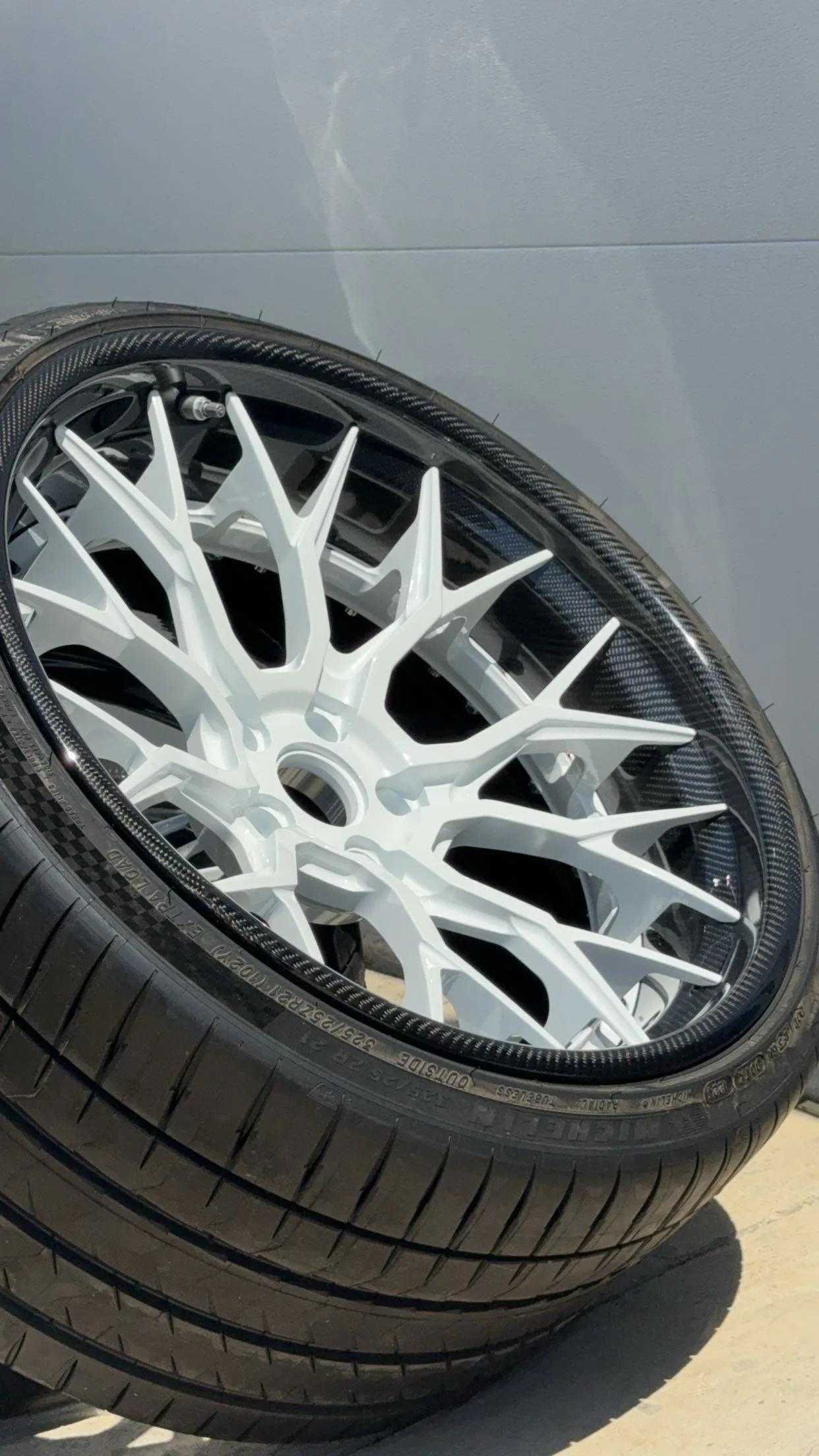
Wheels and Tires
To maximize mechanical efficiency and handling, we recommend a lightweight wheel set paired with high-grip tires. This combination minimizes rotational inertia for quicker acceleration and provides the necessary traction for precise cornering.
-
![A racing helmet placed on top of a Sparco racing harness inside a vehicle.]()
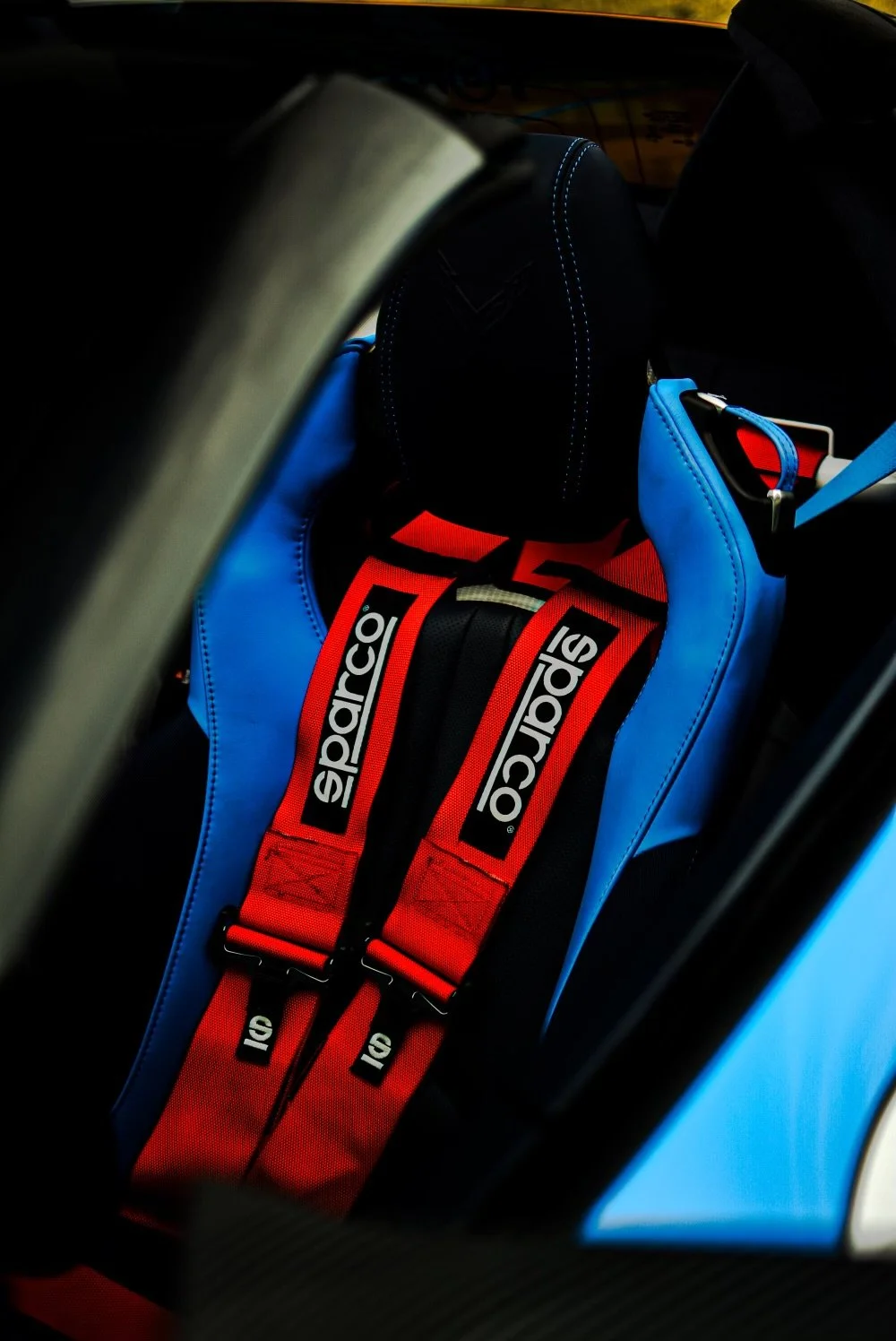
Safety
Enhanced engine output significantly increases a vehicle's performance ceiling. To mitigate the associated risks, we recommend professional-grade safety equipment; structural reinforcements and specialized restraints are essential for maintaining driver integrity during high-impact events.
-
![Car exhaust system components including mufflers and exhaust pipes laid on a concrete floor in a workshop or garage.]()
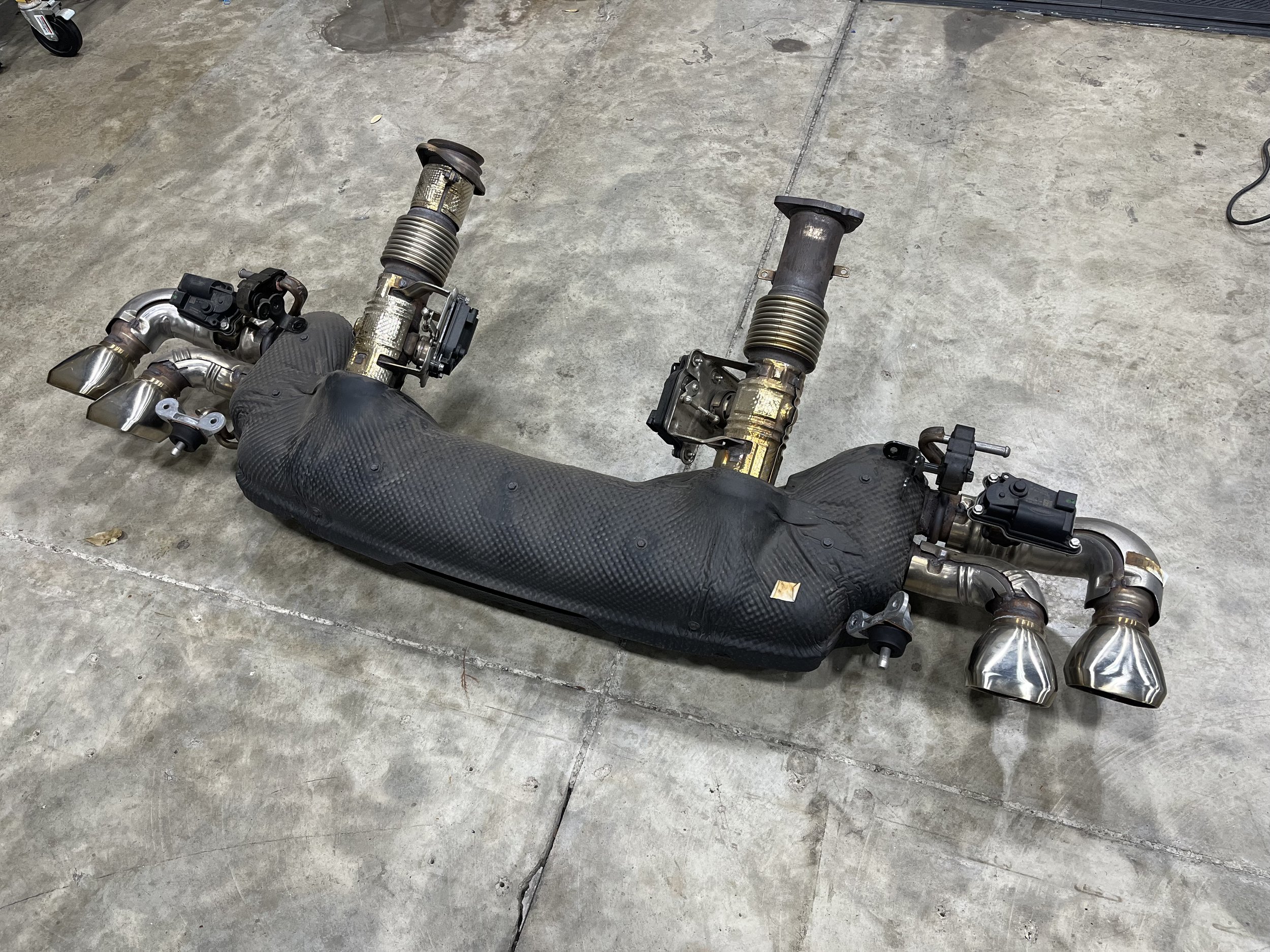
Exhaust and Intake
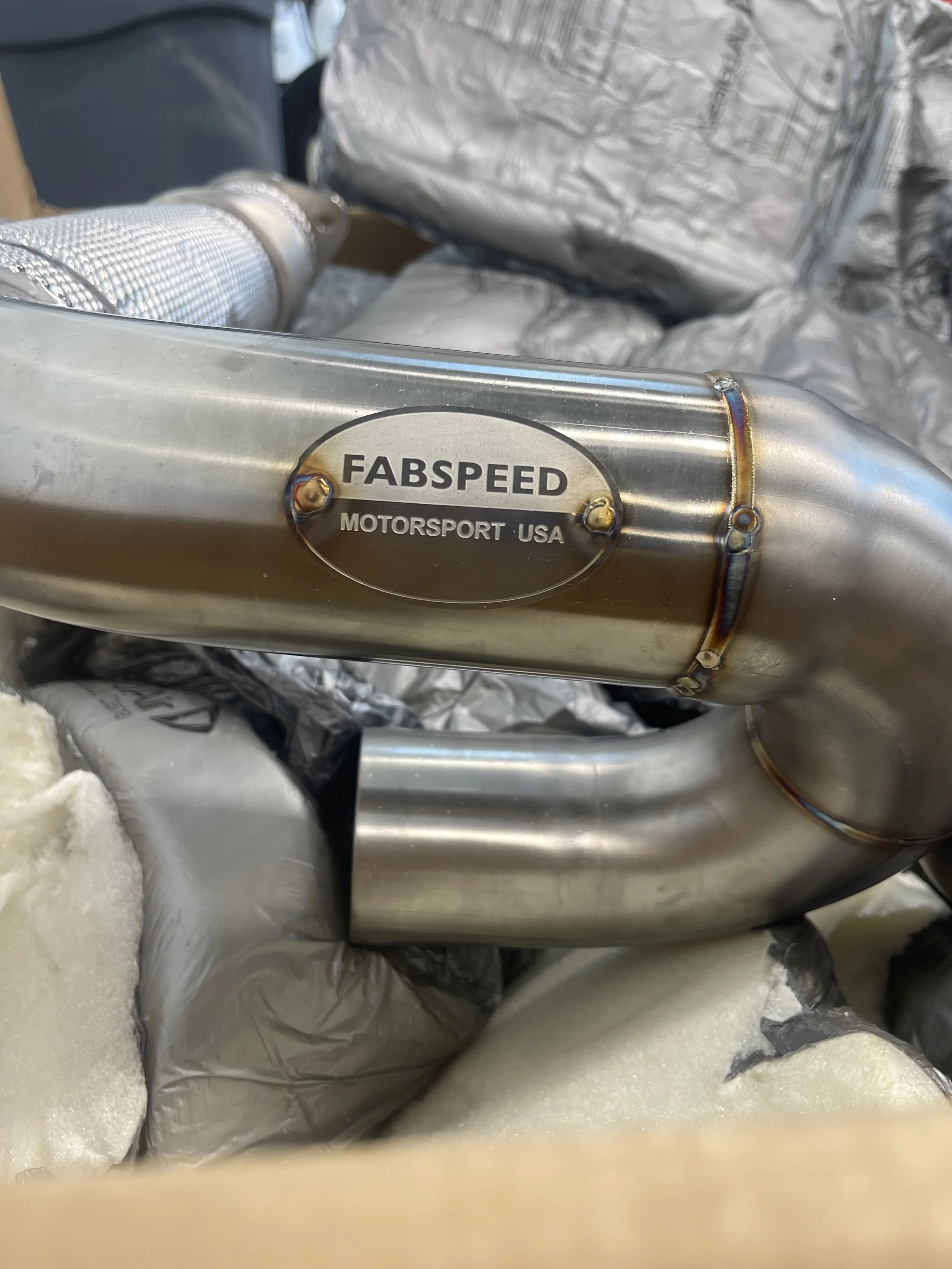
Upgrading to a high-flow intake and exhaust system reduces pumping losses by minimizing backpressure and intake restriction. This modification enhances the engine's ability to cycle air, resulting in a more immediate and tactile driving experience through improved engine responsiveness.
-
![A blue race car with orange racing stripes and the number 14 on the hood, inside an automotive workshop. Equipment and tools are visible around, with a red tool cabinet and a wall banner advertising IOTech motorsports.]()
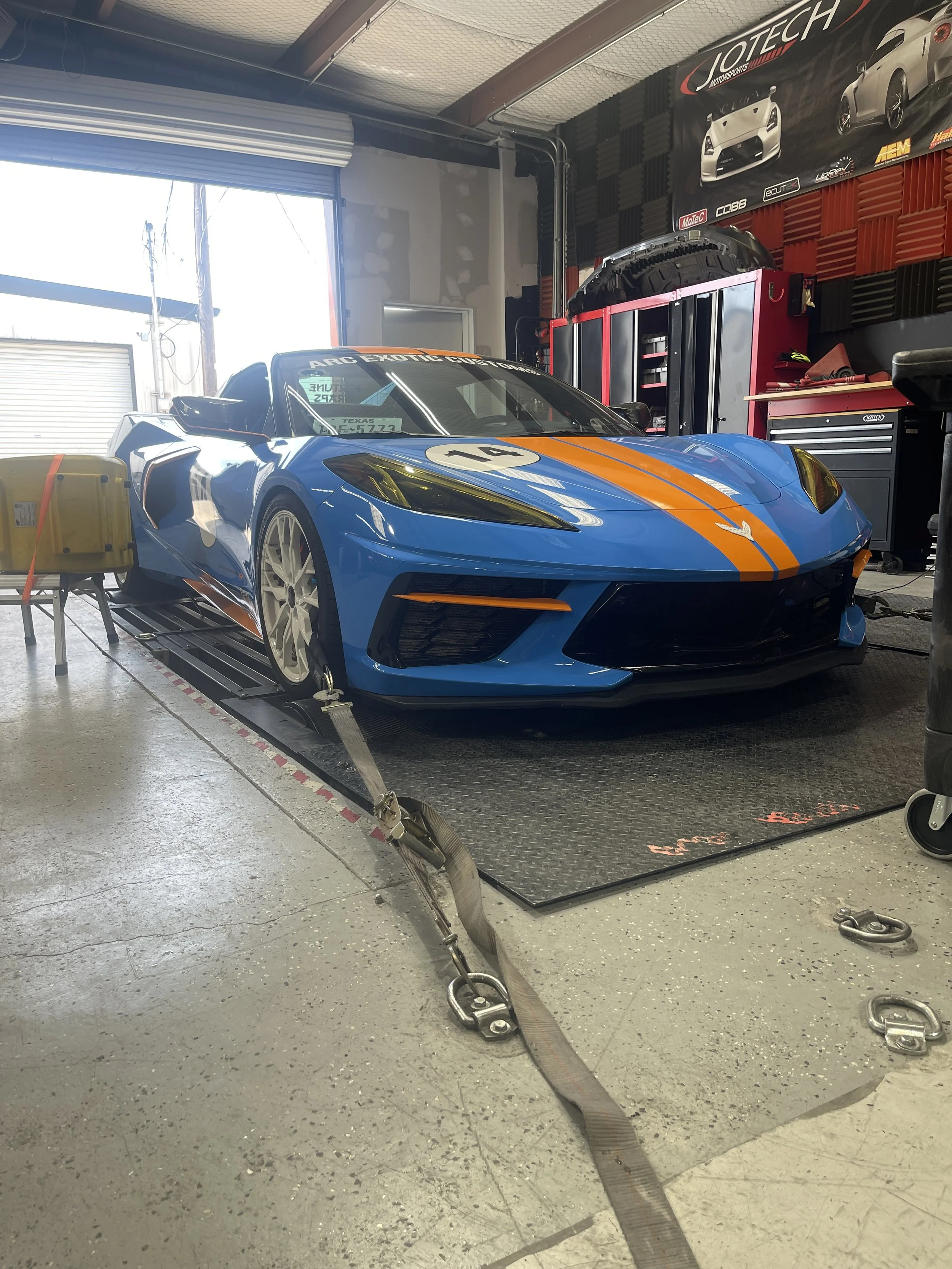
Tuning
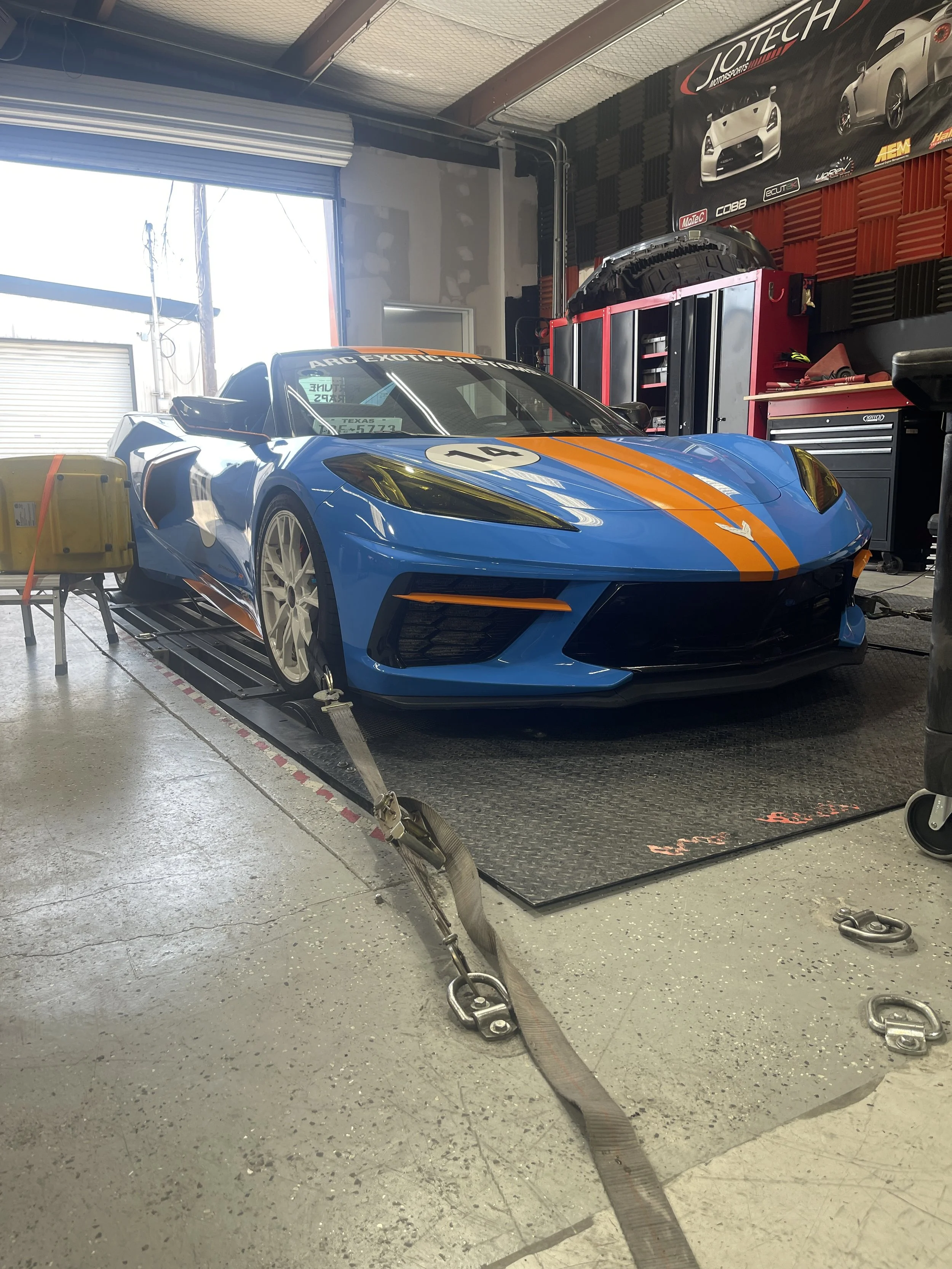
Engine recalibration is the critical final step that harmonizes individual hardware modifications into a cohesive performance system. By precisely mapping air-fuel ratios (AFR) and optimizing boost pressure targets, we can maximize power output while ensuring long-term engine reliability.
-
![Close-up of a turquoise-colored surface with black textured accents and sharp angles, possibly part of a modern electronic device or appliance.]()
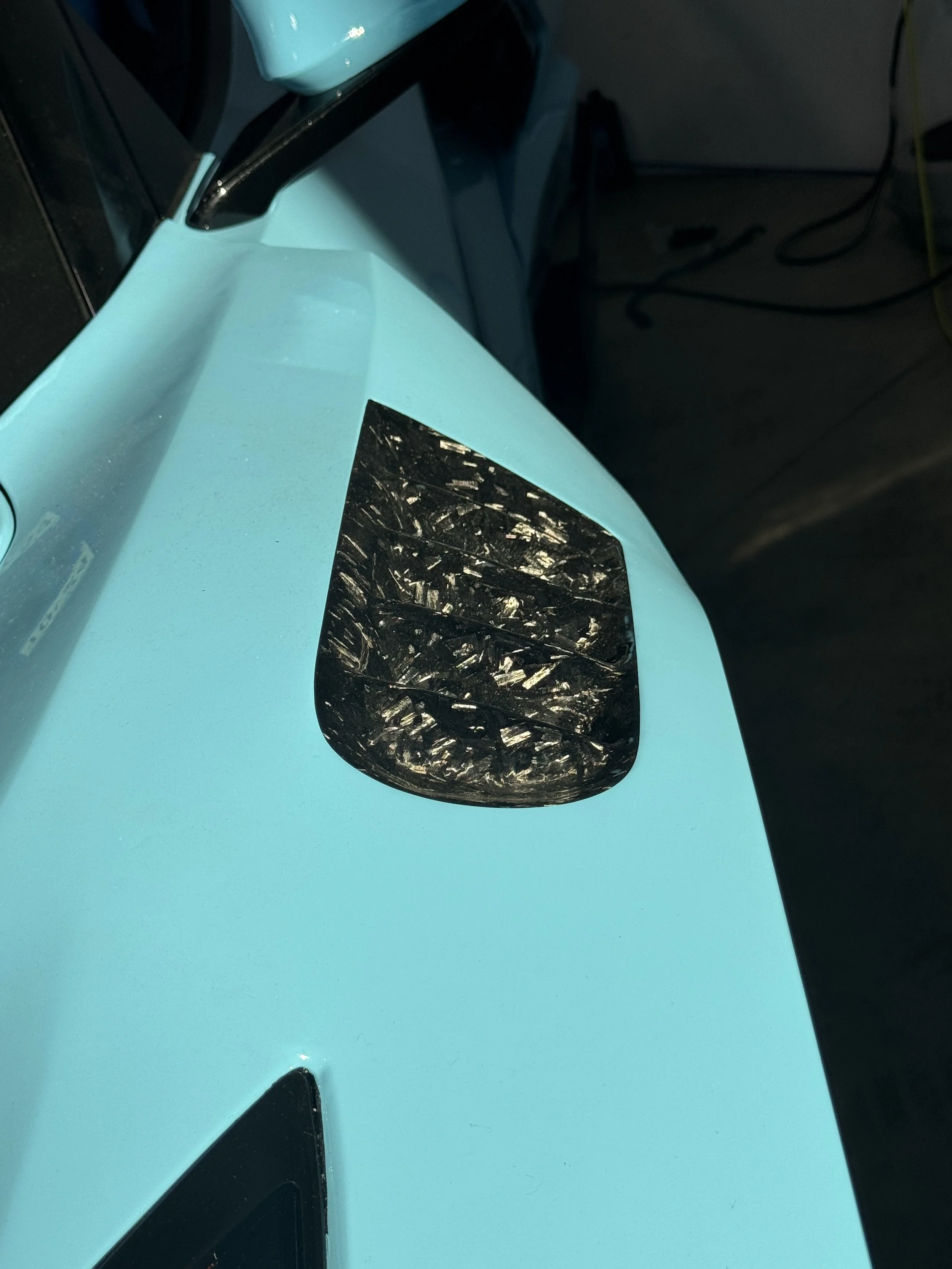
Weight Reduction
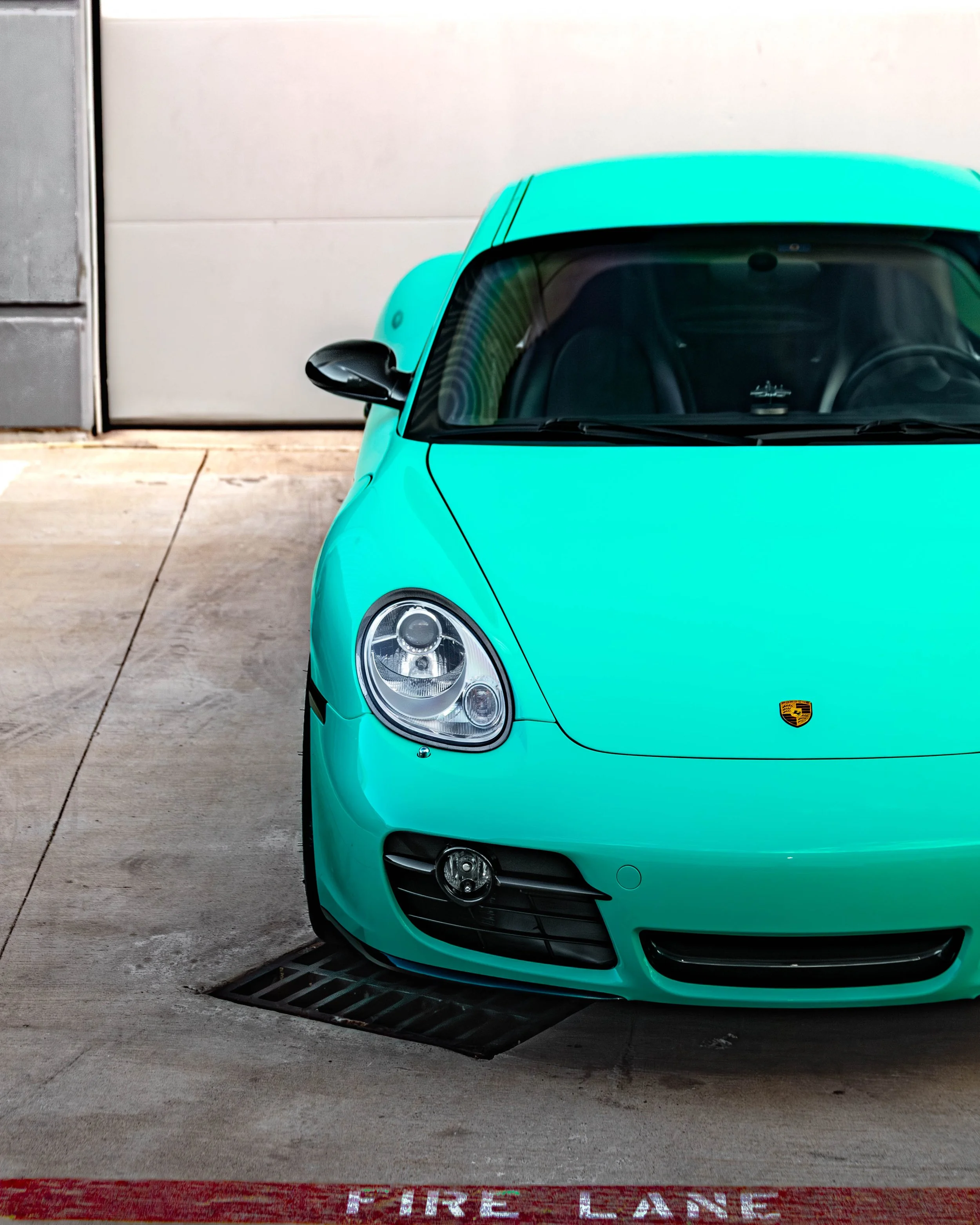
Strategic weight reduction is a cornerstone of elite vehicle builds. Utilizing carbon fiber components provides the dual benefit of shedding unnecessary pounds and enhancing aesthetics, all while offering the durability required for high-performance driving.
-
![Close-up view of a high-performance shock absorber installed on a sports car, with a brake rotor and caliper partially visible in the foreground.]()
Suspension and Swaybars
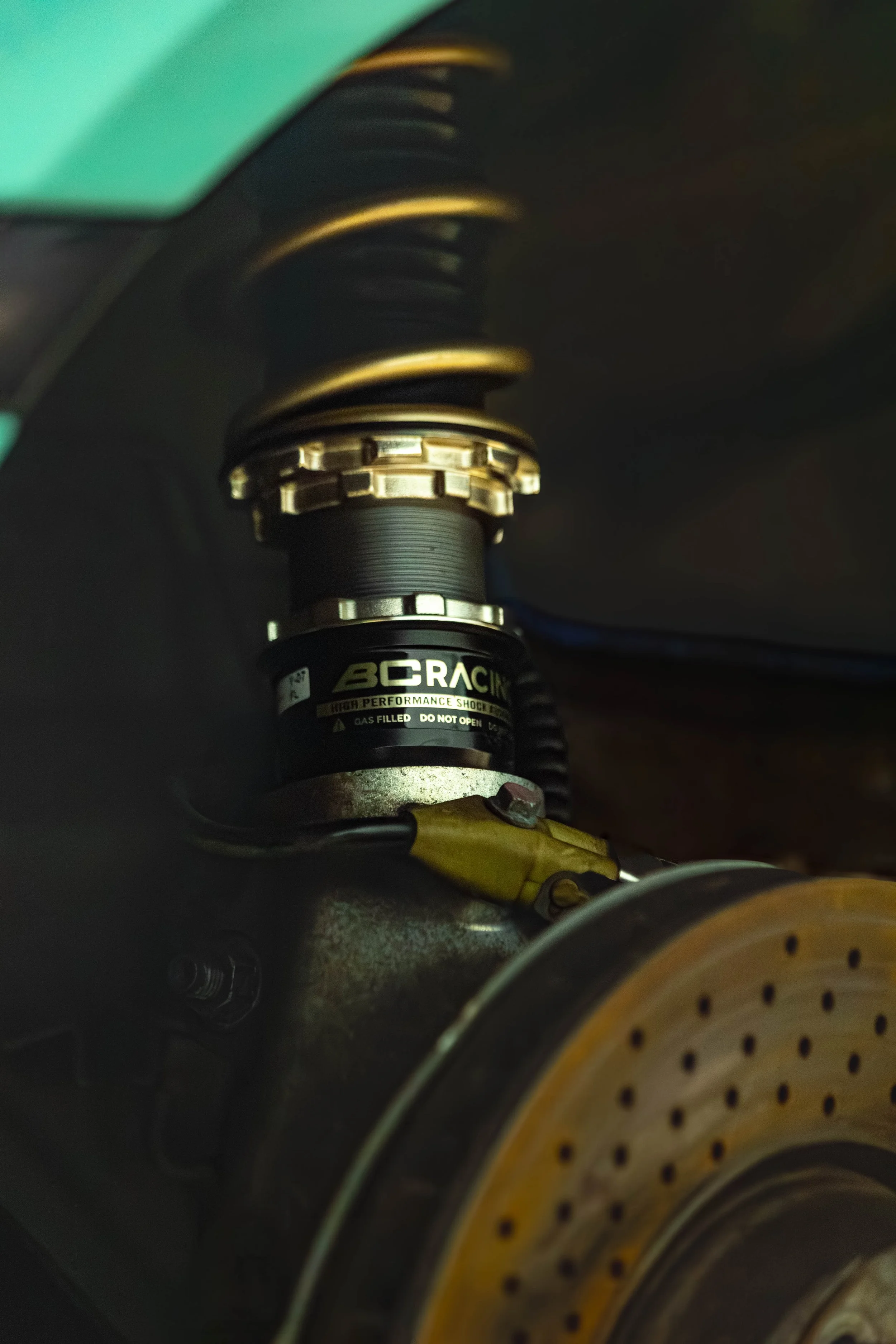
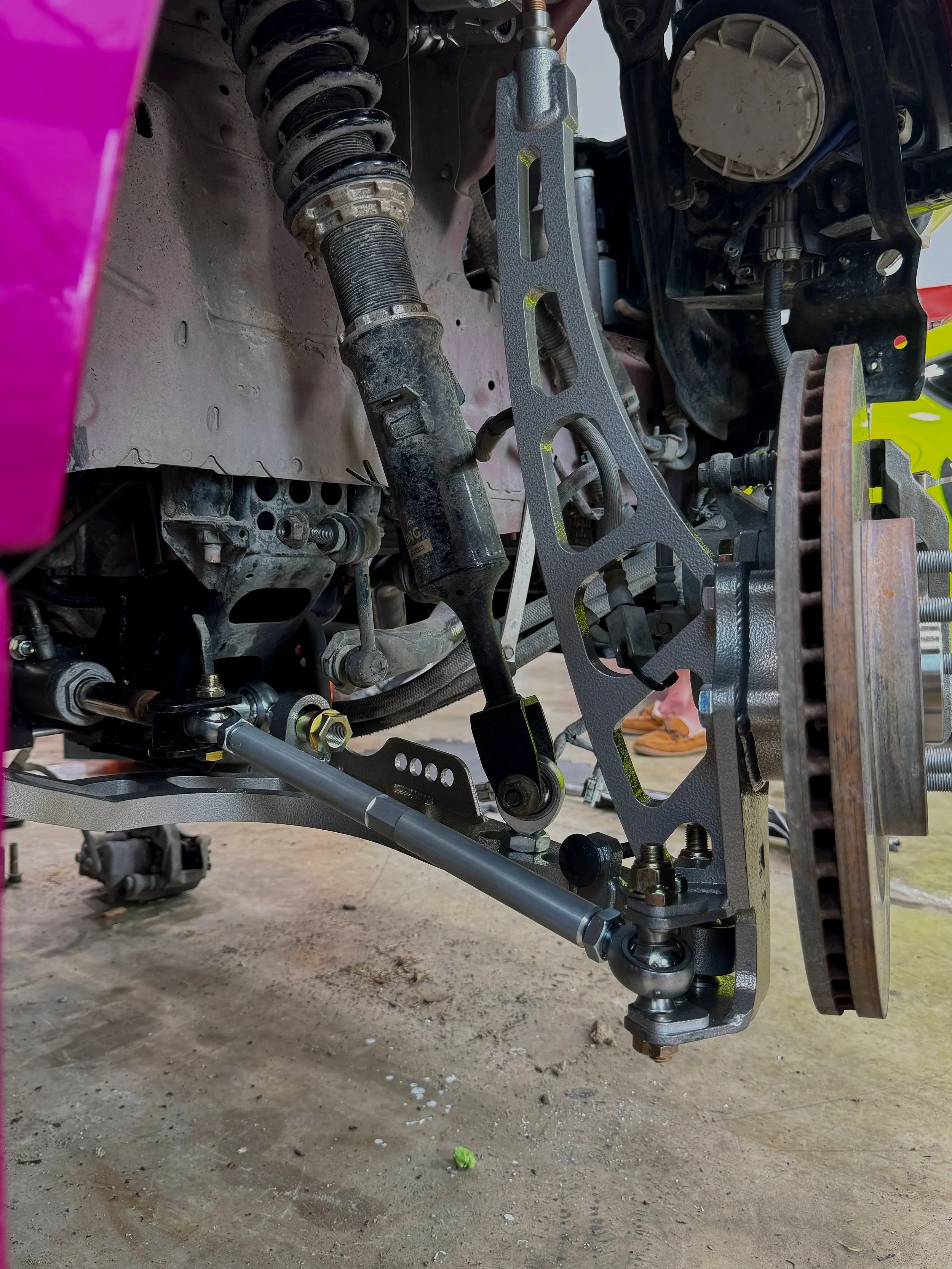
Integrating a high-performance coilover system and upgraded anti-roll bars is essential for neutralizing body roll. This combination ensures the chassis remains flat and composed, optimizing the tire contact patch during aggressive cornering and high-load acceleration.